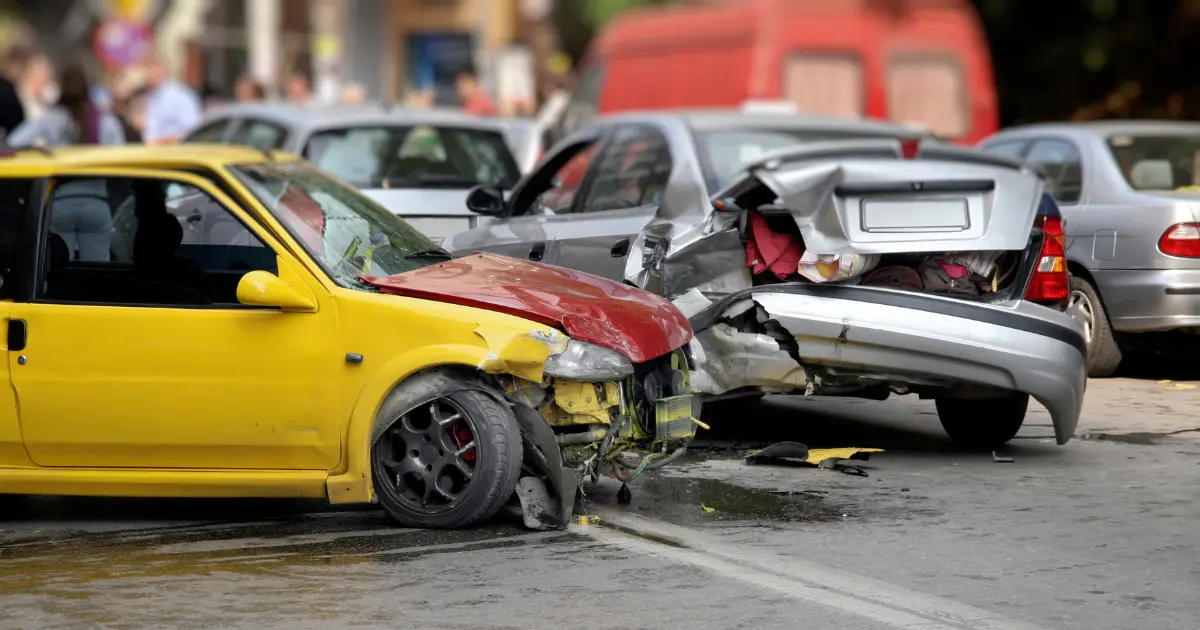
Multi-vehicle accident claims can become complicated quickly because several vehicles, drivers, insurers, and versions of the crash are involved. You might know who hit your car, but what if another driver pushed that vehicle into you? What if two people made separate mistakes? And who pays when every driver blames someone else?
In a crash involving three or more vehicles, responsibility does not always fall on one person. Investigators often need to look at each impact, the order of the collisions, vehicle damage, witness statements, and video evidence.
This article explains how multi-vehicle accident claims are handled under Ontario’s insurance and personal injury laws. Other provinces use different rules.
In this article:
Multi-Vehicle Accident Claims: Quick Answer for Ontario Claimants
Who Pays After a Multi-Vehicle Accident in Ontario?
Why Are Multi-Vehicle Accident Claims More Complicated?
How Is Fault Determined in a Multi-Vehicle Accident?
How Ontario’s Fault Determination Rules Treat Pile-Ups
What Should You Do After a Multi-Vehicle Accident?
What Compensation May Be Available After a Multi-Vehicle Accident?
Who May Be Responsible for a Multi-Vehicle Collision?
Common Types of Multi-Vehicle Accidents
How Does Shared Fault Affect Your Compensation?
Evidence That Can Strengthen a Multi-Vehicle Accident Claim
Reporting and Legal Deadlines in Ontario
How a Lawyer Can Help With Multi-Vehicle Accident Claims
Protect Your Position After a Multi-Vehicle Collision
Multi-Vehicle Accident Claims: Quick Answer for Ontario Claimants
Multi-vehicle accident claims rarely involve one clear mistake or one responsible driver. More than one person can share fault, especially when several vehicles collide within seconds.
Insurers review the order of each impact, the actions of every driver, and how the damage occurred. Under Ontario’s Fault Determination Rules, insurers assess fault based on how each collision occurred. More than one driver can share responsibility.
If you were injured in Ontario, you can generally claim accident benefits through your own insurer. Depending on the circumstances, you may also have a claim against one or more negligent drivers.
This becomes stressful when drivers give different versions of the same event. One person says they stopped in time. Another says they were pushed forward. A third blames poor road conditions.
In a multi-vehicle accident claim, strong evidence can separate facts from blame and help protect your right to compensation.
Who Pays After a Multi-Vehicle Accident in Ontario?
In Ontario, different parts of a multi-vehicle accident claim can be paid through different sources. Understanding who pays can make the claims process much easier.
- Accident benefits are generally claimed through your own insurance company, regardless of who caused the collision.
- Vehicle damage is generally handled through your own insurer where Direct Compensation–Property Damage (DCPD) coverage applies, subject to Ontario’s current insurance rules.
- Personal injury compensation can be claimed against one or more negligent drivers or other responsible parties, depending on the circumstances.
- Uninsured automobile coverage or Ontario’s Motor Vehicle Accident Claims Fund may apply in limited situations when insurance is unavailable.
Why Are Multi-Vehicle Accident Claims More Complicated?
A multi-vehicle accident claim is usually more complex than a two-car collision because several drivers, insurers, and impacts may be involved. Instead of identifying one responsible driver, investigators must understand how the entire crash happened. Different versions of the accident can also delay your claim and make it harder to determine liability.
Several Collisions Can Happen Within Seconds
A chain-reaction crash often involves more than one impact. For example, another vehicle may push your car into the vehicle ahead before a third vehicle joins the collision. Each impact can cause different damage or injuries, making the claim more difficult to assess.
More Than One Driver May Share Responsibility
Responsibility does not always rest with one driver. One person may start the crash, while another driver’s actions can make it worse. This is why who is at fault in a multi-car accident is not always a simple question.
Multiple Insurers May Dispute Liability
Each driver’s insurer investigates the collision from its own policyholder’s perspective. When several insurers become involved, they may disagree about who caused the damage or injuries, which can slow the claims process.
The Same Crash Can Produce Conflicting Accounts
Drivers, witnesses, police reports, and video footage do not always tell the same story. Putting these pieces together is often necessary to understand how the collision actually happened.
How Is Fault Determined in a Multi-Vehicle Accident?
In multi-vehicle accident claims, insurers and investigators look at the entire sequence of events instead of blaming the first driver they identify. They examine each impact to determine who contributed to the collision and how responsibility should be assigned.
Investigators Examine Each Impact Separately
Instead of treating the pile-up as one event, investigators often review each collision individually. They consider questions such as:
- Which vehicle made the first contact?
- Was another vehicle already stopped?
- Was a vehicle pushed into another one?
- Did another driver have enough time to stop?
- Did a separate action cause another collision?
This step-by-step approach helps build a clearer picture of the crash.
Insurers Review the Available Evidence
Insurers compare different types of evidence before making a fault decision, including:
- Police reports
- Driver and witness statements
- Vehicle damage
- Photos and videos
- Dashcam or traffic-camera footage
- Weather and road conditions
- Electronic vehicle data, where available
- Accident reconstruction in serious cases
In Ontario, insurers apply the Insurance Act and the Fault Determination Rules when assessing insured vehicle damage.
Fault May Be Shared Between Several Drivers
More than one driver can share responsibility for the same collision. Depending on the circumstances, insurers may assign different percentages of fault to different drivers.
How shared fault affects your multi-vehicle accident compensation depends on the claimant’s policy, insurance rules, and the type of claim you make.
Does the Rear Driver Always Cause a Chain-Reaction Crash?
No. The rear driver is not automatically responsible for every chain-reaction accident claim. The answer depends on how the crash occurred.
For example:
- A driver independently rear-ends another vehicle.
- A stopped vehicle is pushed into the vehicle ahead.
- Several drivers fail to leave enough stopping distance.
- An unsafe lane change starts the chain reaction.
The sequence of impacts is often more important than simply identifying the last vehicle in the line.
How Ontario’s Fault Determination Rules Treat Pile-Ups
Ontario’s Fault Determination Rules specifically address chain-reaction collisions and pile-ups.
Chain-Reaction Collisions in the Same Lane
In Ontario, same-lane chain-reaction collisions are generally assessed as separate two-vehicle collisions under the Fault Determination Rules. This helps insurers determine responsibility for each impact instead of treating the entire pile-up as one collision.
Pile-Ups in Adjacent Lanes
For certain pile-ups involving three or more vehicles travelling in the same direction in adjacent lanes, Ontario’s Fault Determination Rules can assign each driver involved in a two-vehicle impact 50% fault for that particular impact. The exact rule depends on how the collision occurred.
Insurance Fault Is Not Always the Whole Personal Injury Analysis
An insurance fault decision helps determine how an insurance claim is handled, but it does not automatically decide every issue in a personal injury claim.
A personal injury case can also consider:
- Negligence
- Causation
- The injuries suffered
- Medical expenses
- Lost income
- Future care needs
The insurer’s Fault Determination Rules assessment helps determine insurance fault, but it does not automatically decide every negligence issue in a personal injury lawsuit. Courts may consider additional evidence when deciding legal responsibility.
What Should You Do After a Multi-Vehicle Accident?
After a multi-vehicle crash, your actions can affect both your safety and your multi-vehicle accident claim. Focus on getting help, protecting evidence, and reporting the collision as required.
Get Medical and Emergency Help
Call 911 if anyone is injured or the accident creates a dangerous situation.
Do not move anyone with a suspected serious injury unless they face immediate danger. Even if you feel fine, get a medical assessment because some injuries appear hours or days later.
Identify Every Vehicle and Driver
Collect information from every driver involved, not only the person who hit you.
Record:
- Names and contact details
- Driver’s licence numbers
- Licence plate numbers
- Insurance information
- Vehicle details
- The location of each vehicle after the crash
Record the Entire Accident Scene
If it is safe, take photographs or videos before the vehicles are moved.
Capture:
- All vehicles involved
- Vehicle damage
- Lane positions
- Debris and skid marks
- Traffic signs and signals
- Weather and road conditions
- Nearby security or traffic cameras
Find Independent Witnesses
Independent witnesses can help when drivers give different versions of the collision.
Ask for their names and contact information, but avoid discussing who was at fault.
Report the Collision Promptly
Report the collision to the police, collision reporting centre, and your insurer as required in Ontario law.
Insurance Bureau of Canada recommends notifying your insurer promptly. In Ontario, policyholders should generally report the accident within seven days or as soon as reasonably possible.
What Compensation May Be Available After a Multi-Vehicle Accident?
The compensation available after a multi-vehicle accident depends on your injuries, insurance coverage, Ontario insurance rules, and the facts of your case.
Accident Benefits
Depending on your Ontario auto policy, accident benefits may help cover:
- Medical treatment
- Rehabilitation
- Attendant care
- Income replacement
- Other injury-related expenses
In Ontario, accident benefits may be available regardless of who caused the collision. For Ontario auto policies entered into or renewed on or after July 1, 2026, medical, rehabilitation, and attendant-care benefits remain mandatory. Several other accident benefits become optional unless the policyholder chooses that coverage.
Vehicle and Property Damage
Depending on your policy and provincial rules, you may recover costs for:
- Vehicle repairs or replacement
- Towing and storage
- Rental vehicle expenses
- Damaged personal property
Coverage depends on your insurance policy and the circumstances of the collision.
A Claim Against One or More At-Fault Parties
Under Ontario law and the facts of the case, you may also claim compensation from one or more at-fault parties for:
- Pain and suffering
- Past and future income loss
- Medical and care expenses
- Future care needs
- Housekeeping or support losses, where legally recoverable
Uninsured or Unidentified Drivers
If an uninsured or unidentified driver was involved, special insurance provisions or provincial compensation programs may apply.
For example, Ontario’s Motor Vehicle Accident Claims Fund may provide compensation in limited situations where no insurance is available.
Who May Be Responsible for a Multi-Vehicle Collision?
A multi-vehicle accident claim does not always involve only one responsible driver. Depending on how the crash happened, several people or organizations could share responsibility. Identifying the correct parties is important because it can affect how your claim moves forward.
The Driver Who Started the Initial Collision
The first driver who caused the crash is often responsible for starting the chain of events.
Common causes include:
- Distracted driving
- Speeding
- Unsafe lane changes
- Failing to stop in time
- Following too closely
- Losing control of the vehicle
However, starting the collision does not always mean that driver is responsible for every impact that follows.
A Driver Who Caused a Separate Later Impact
Sometimes another driver makes a separate mistake after the first collision. For example, a driver who was speeding or not paying attention might crash into vehicles that had already stopped.
In these situations, more than one driver could contribute to the final damage or injuries.
A Commercial Driver, Vehicle Owner, or Employer
Some multi-vehicle accident claims involve commercial vehicles such as transport trucks, delivery vans, or employer-owned vehicles.
Depending on the circumstances, responsibility could involve:
- A commercial driver
- The vehicle owner
- An employer whose driver was working at the time
- Poor vehicle maintenance
Other Potentially Responsible Parties
In less common situations, other parties could also be involved, such as:
- Vehicle manufacturers
- Repair or maintenance companies
- Road contractors
- Government or public authorities
Whether these parties are responsible depends on the evidence and the laws that apply to the case.
Common Types of Multi-Vehicle Accidents
Not every multi-vehicle accident happens the same way. Recognizing the type of collision can help you understand how investigators and insurers examine the claim.
Rear-End Chain-Reaction Collisions
One driver fails to stop in time and hits the vehicle ahead, pushing it into another vehicle. This is one of the most common chain-reaction accident claims.
Highway Pile-Ups
High-speed traffic, poor visibility, snow, ice, fog, or sudden traffic stops can involve several vehicles within seconds.
Multi-Vehicle Intersection Collisions
A collision in an intersection can push one vehicle into other traffic, creating multiple impacts involving vehicles travelling in different directions.
Lane-Change and Sideswipe Pile-Ups
An unsafe lane change or sideswipe can force nearby drivers to brake or swerve, leading to additional collisions.
Commercial Truck Multi-Vehicle Crashes
Accidents involving transport trucks often become more complicated because of larger vehicles, longer stopping distances, cargo, maintenance records, and commercial driving evidence.
How Does Shared Fault Affect Your Compensation?
Sharing fault does not always prevent you from recovering compensation. However, it can affect the amount you receive depending on provincial law and the facts of your case.
Your Compensation May Be Reduced If You Share Fault
If you are partly responsible for the collision, your multi-vehicle accident compensation could be reduced based on your share of responsibility. The exact rules vary across Canada.
Several Defendants May Be Involved
Some claims involve more than one at-fault driver or party. This means your claim could be brought against several defendants instead of only one person.
Insurance Coverage Limits Can Matter
Serious pile-ups often involve multiple injured people. When several claims are made against the same insurance policy, the available liability coverage can become an important issue.
Evidence That Can Strengthen a Multi-Vehicle Accident Claim
Strong evidence can support your multi-vehicle accident claim and help establish the full extent of your losses.
Keep copies of:
- Police or collision reports
- Photographs and videos of the scene
- Dashcam footage
- Witness names and contact information
- Medical records
- Repair estimates
- Vehicle inspection reports
- Employment and income records
- Medical bills and treatment receipts
- A journal recording your symptoms and recovery
- Accident reconstruction reports in serious or disputed cases
The more complete your records are, the easier it becomes to support your claim if questions arise later.
Reporting and Legal Deadlines in Ontario
If you’ve been injured, acting quickly is important. Missing an important deadline could affect your right to receive benefits or start a lawsuit.
Some of the main Ontario deadlines include:
- Report the accident to your insurer within seven days, or as soon afterward as reasonably possible.
- Submit your completed Accident Benefits Application within 30 days after receiving the application forms.
- Written notice of an intention to bring an automobile bodily-injury action should generally be served on the defendant within 120 days after the incident. Late notice does not necessarily prevent a lawsuit, but it can have legal consequences.
- The general limitation period for starting a personal-injury lawsuit is two years from the date the claim was discovered, subject to exceptions.
- If poor municipal road conditions contributed to the collision, written notice to the municipality may generally be required within 10 days after the injury. Exceptions may apply.
Other deadlines and exceptions can apply depending on your claim, so it is best to act promptly after the collision.
How a Lawyer Can Help With Multi-Vehicle Accident Claims
A multi-vehicle accident claim often involves several drivers, insurers, and disputed facts. A lawyer can help protect your interests by gathering evidence, identifying responsible parties, and ensuring your losses are properly assessed.
Reconstructs the Sequence of Collisions
A lawyer reviews the available evidence to understand how the crash happened. This may include:
- Vehicle damage
- Police reports
- Photos and videos
- Dashcam footage
- Witness statements
- Expert reconstruction evidence, where needed
A clear timeline can strengthen your claim when different drivers tell different stories.
Identifies Every Potentially Responsible Party
Responsibility does not always stop with one driver.
A lawyer can determine whether the claim involves:
- One or more drivers
- Vehicle owners
- Employers
- Commercial trucking companies
- Other responsible parties, where appropriate
This helps ensure every potential source of compensation is considered.
Handles Multiple Insurers and Conflicting Positions
When several insurance companies become involved, each may try to shift responsibility to another driver.
A lawyer can manage communications with insurers, protect your rights, and respond to disputes over liability so you can focus on your recovery.
Documents the Full Value of the Claim
Your claim should reflect more than your vehicle damage.
A lawyer can document losses such as:
- Medical treatment
- Lost income
- Future care needs
- Reduced earning capacity
- Long-term disability
- Other recoverable losses
This helps ensure the value of your claim reflects the full impact of the accident.
Protect Your Position After a Multi-Vehicle Collision
Multi-vehicle accident claims are often more complicated than they first appear. Several drivers can share responsibility, insurers may disagree about fault, and the full extent of your injuries or losses may not be clear right away.
That is why you should report the collision promptly, preserve important evidence, and avoid accepting a settlement before you understand the full value of your claim.
If you were injured in a multi-vehicle collision, HIMPRO can review your case, explain your legal options, and help determine who may be responsible. The team can also assess your damages and work to recover the compensation you deserve.
You do not pay legal fees upfront. HIMPRO only gets paid if your claim is successfully resolved.